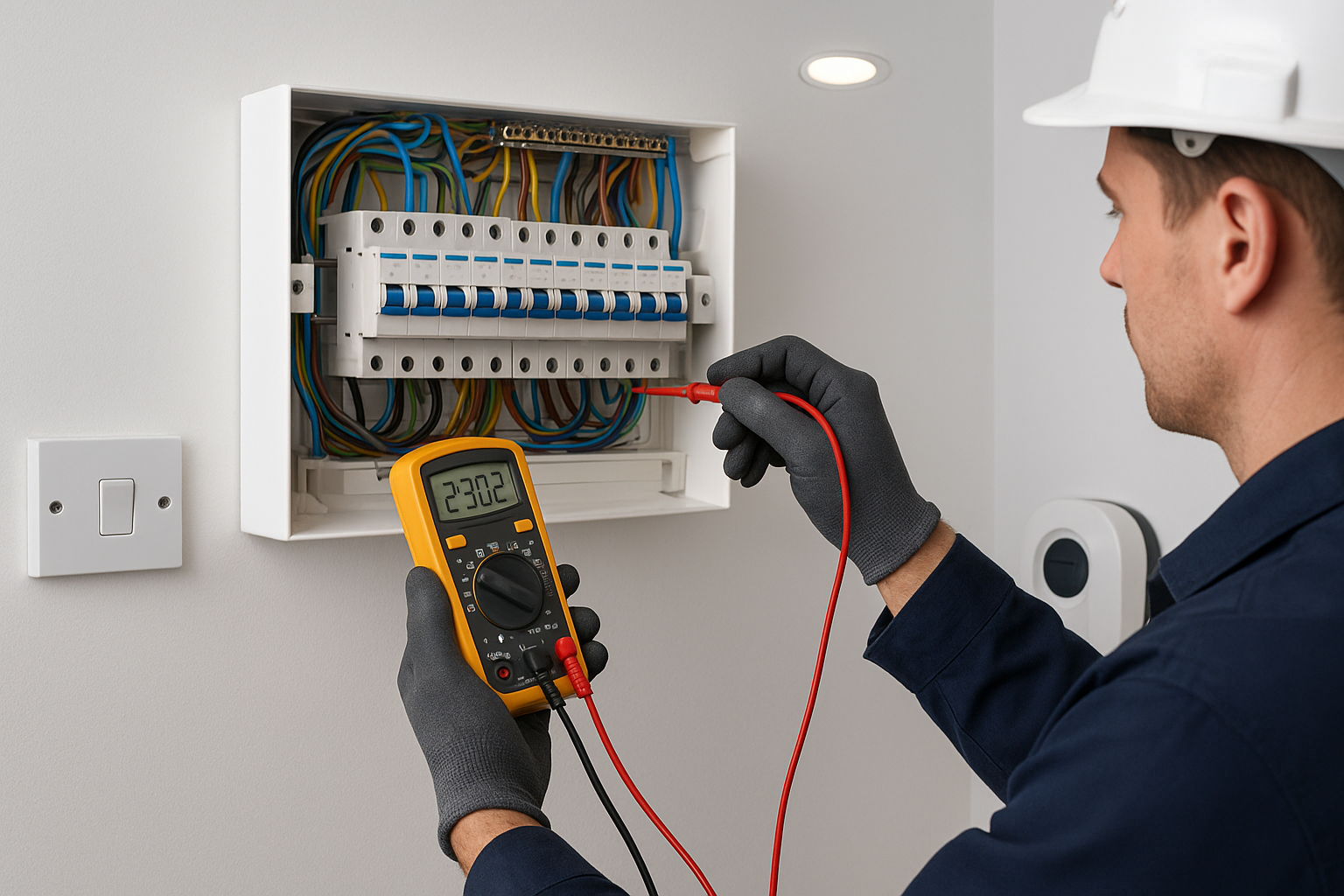
If your fuse box keeps tripping, a breaker will not reset, or part of your property has lost power, Bolt Brilliance Electricians can help with fuse box repair in Crouch End. We support homeowners, landlords, tenants and property managers across Crouch End and nearby areas including Hornsey, Highgate, Muswell Hill, Finsbury Park and Harringay.
We regularly deal with fault finding on older fuse boards, nuisance tripping on modern consumer units, and power loss in Victorian terraces, converted flats, older rewires, modern flats, shops and offices. If you have a buzzing or hot fuse board, repeated RCD trips, or an old fuse wire board that no longer feels safe, the right next step is to switch off affected circuits if you can do so safely and arrange an electrician to inspect it.
Call 020 3633 2830 or email info@crouch-end-electricians.co.uk to request a visit. We work 24 hours and aim to give clear, practical advice based on the fault in front of us, not guesswork.
Our local work has included an emergency power loss callout in Hornsey, a kitchen wiring inspection in Highgate after nuisance tripping, and support with a replacement light fitting in Muswell Hill. That kind of real-world experience matters because fuse box faults are often symptoms of a wider issue in the circuit, the equipment, or the connected appliances.
Crouch End properties vary widely. Around Crouch End Broadway and the Clock Tower you will find a mix of period homes, flats above shops, and renovated buildings where the electrical installation may have been altered over time. Near Parkland Walk, Priory Park and Alexandra Palace, we also see older installations that need careful testing before any repair or upgrade is agreed.
Below we explain the main fuse box problems we deal with, what we check, and how we approach repairs safely.
Fuse Box Fault Finding in Crouch End
Fuse box fault finding is the process of identifying why a consumer unit, fuse board or circuit is not operating as it should. In many homes and premises, the visible problem is not the real cause. A breaker may be tripping because of a damaged socket, a faulty appliance, water ingress, loose connections, or a circuit that has been overloaded for years.
In Crouch End, we often see fault finding requests from landlords and property managers who need to know whether the issue is isolated, repeatable and safe to leave on while tenants remain in the property. We also help homeowners who have noticed a burning smell, intermittent power, or a board that feels warm to the touch.
Our fault finding approach is practical and methodical. We look at the symptoms, test the affected circuits, inspect the consumer unit or fuse board, and narrow the fault down before discussing repair options. Where relevant, we may also check for signs of wear on sockets, lighting circuits, cooker circuits, shower circuits and other equipment connected to the board.
If your property is in a Victorian terrace, a converted flat or an older rewire, there may be mixed wiring ages and past alterations. That can make the fault less obvious, which is why proper testing is more useful than swapping parts at random.
Common signs you may need fuse box fault finding include:
- A fuse box keeps tripping without an obvious cause
- Breaker will not reset after a trip
- Half the house has no power
- Lights or sockets cut out intermittently
- Buzzing, heat or discoloration at the fuse board
- An old fuse wire board with repeated failures
If the board is damaged, hot, or producing a burning smell, stay clear of it and do not keep resetting the breaker. Switch off what you can safely isolate and call us for advice.
Tripping Breaker Investigation in Crouch End
A tripping breaker investigation is usually needed when a circuit breaker or main switch trips repeatedly and the cause is not immediately clear. This can happen on lighting circuits, socket circuits, kitchen circuits, shower circuits or circuits feeding equipment that has developed a fault.
We often find that the issue appears only when a certain appliance is used, or when several items are running together. In kitchens, for example, kettles, microwaves, dishwashers and washing machines can expose weak points in the installation. In shops and offices, the problem may show up during opening hours when more equipment is on at once.
For property managers, it is especially important to record when the breaker trips, what was being used at the time, and whether the same circuit is affected each time. That information helps us identify patterns faster and reduces disruption for tenants.
During a tripping breaker investigation in Crouch End, we may check:
- Which circuit is tripping and under what load
- Whether a specific appliance or outlet is linked to the fault
- Signs of loose terminations or heat damage
- Whether the breaker rating suits the circuit design
- Whether the circuit has been altered or extended over time
We do not recommend repeatedly resetting a breaker if it keeps tripping. That can mask a fault and may increase risk. If the breaker will not stay on, the safest step is to leave it off and arrange an inspection.
RCD Nuisance Tripping in Crouch End
RCD nuisance tripping is a common complaint in homes and rented properties. An RCD is designed to disconnect the supply when it detects an imbalance that may indicate a fault. While nuisance trips can be frustrating, they should not simply be ignored or bypassed. The device may be doing its job and warning you about a real issue.
In Crouch End, we often see RCD nuisance tripping in older homes where mixed wiring, damp, ageing accessories or multiple appliance faults are all possible. It can also happen after a new appliance is installed, after decorating work, or following changes to outside sockets, garden lighting or kitchen equipment.
Typical causes include:
- Moisture in an outdoor socket or light fitting
- Faulty appliances with earth leakage
- Damaged cables hidden in walls or floors
- Accumulated wear in older circuits
- Incorrectly connected or altered wiring
If your RCD trips and you are unsure why, keep clear of any damaged wiring and do not use a circuit that has shown signs of faulting. We can inspect the installation, test the affected circuits and help you work out whether the issue lies in the board, the circuit or the connected equipment.
For landlords and property managers, nuisance tripping should be documented carefully, especially if tenants report repeated outages. Good records help show what was reported, when it occurred and what action was taken.
Faulty Breaker Replacement in Crouch End
Sometimes the investigation shows that the breaker itself is faulty, worn or not operating correctly. In those cases, a faulty breaker replacement may be the right solution, but only after proper testing confirms that the circuit is otherwise safe to re-energise.
We do not replace breakers blindly. If a breaker has tripped because of a genuine circuit fault, fitting a new one without fixing the underlying issue will not solve the problem. The same applies where the consumer unit shows signs of heat damage, loose connections or age-related deterioration.
We can advise on replacement options where appropriate, including the suitability of the existing consumer unit, the condition of the board, and whether further electrical repairs or consumer unit work should be considered. In some properties, especially older flats and houses around Crouch End and nearby Highgate or Hornsey, a repair may be enough. In others, the board may be part of a wider upgrade conversation.
We also consider how the installation is used day to day. A landlord property with several tenants, a shop near Crouch End Broadway, or a family home with multiple high-load appliances may need a different approach from a lightly used flat.
If the breaker or board is visibly damaged, or if there is any sign of burning, heat or arcing, do not continue to operate it. Ask for an electrician to inspect it before the supply is restored.
Fuse Board Safety Checks in Crouch End
Fuse board safety checks are useful when you want a clear view of the condition of the installation before a repair, letting decision or property handover. They are also relevant where a fuse wire board is still in place, where the board is old, or where the history of the installation is not fully known.
For landlords and property managers, safety checks help with record keeping, tenant management and planning. If an EICR is due or a previous report has highlighted observations, a fuse board inspection can help you understand what needs attention before the next step is booked.
We look for signs such as:
- Age-related wear in the consumer unit or fuse board
- Evidence of overheating or scorching
- Loose or damaged accessories nearby
- Signs of poor previous alterations
- Whether the board appears suitable for the property’s current use
In rented homes, access and authorisation matter. Landlords and property managers should make sure they have the right to request electrical work, and tenants should be given proper notice before a visit. If a tenant reports a fault, it is sensible to keep written records of the complaint, the time it was received, the action taken and any follow-up advice.
For EICR duties, the key point is that the report should be completed by a competent electrician and the findings should be kept on file. Where a report identifies issues, repairs should be arranged without delay. If you manage multiple properties in Crouch End, Hornsey, Muswell Hill, Finsbury Park or Harringay, keeping accurate records makes later compliance and maintenance much easier.
We can also help if the fault turns out to involve related services such as electrical repairs, emergency electrician attendance, consumer unit work, lighting installation, socket installation or electrical fault finding. That means one call can often cover the immediate problem and the wider follow-up work.
Our recent jobs show the kind of practical support we provide: in Hornsey we attended a loss-of-power issue and identified the problem circuit before leaving the installation secure; in Highgate we reviewed kitchen points after nuisance tripping and explained the repairs needed before further appliance use; in Muswell Hill we helped with a replacement light fitting and checked the switch line before leaving the room ready for normal use.
If you need fuse box repair in Crouch End, or you manage a property where the board needs checking before tenants move in, call 020 3633 2830 today. You can also email info@crouch-end-electricians.co.uk. We serve local homes, rented properties, shops and offices across Crouch End and the surrounding area, and we’ll give you straightforward advice on the safest next step.
Customers should ask for current scheme registration and insurance details before electrical work is booked if they need those documents for their own records or landlord file. For notifiable work, certification should be provided where applicable.